What if your business didn't depend on your best day?
Because discipline runs out. Systems don't.

No, never ever!
That’s what my daughter tells me when I ask her to write the same letter more than five times.
She doesn’t want to do it. I understand why. I was the same.
Writing was my weakness growing up. I practised it over and over, not because I enjoyed it, but because I had to. It became acceptable. Not great. Just good enough.
And then I became a programmer. Turns out, my strength was elsewhere all along.
Repetition is boring. And sometimes your strengths lie somewhere else entirely.
In business, you can’t excel at everything. Not marketing, sales, operations, and admin. Nobody can.
And that creates a problem most people don’t name until they discover it: inconsistency.
Some things get your best effort. Others depend on your mood, your energy, the kind of day you’re having.
That’s the ceiling most people don’t see until they hit it.
This is where AI helps. Not by making you better at everything.
But by making the boring parts run the same way, every time, without you, without relying on discipline, without needing your best day.
Most people miss this. They chase the impressive version. The big automation. The workflow that looks good in a demo. They skip the boring part. And then wonder why it doesn’t work.
Here are five small, boring automations I built. They won’t impress you. They work.
Tool 1: Quora Research
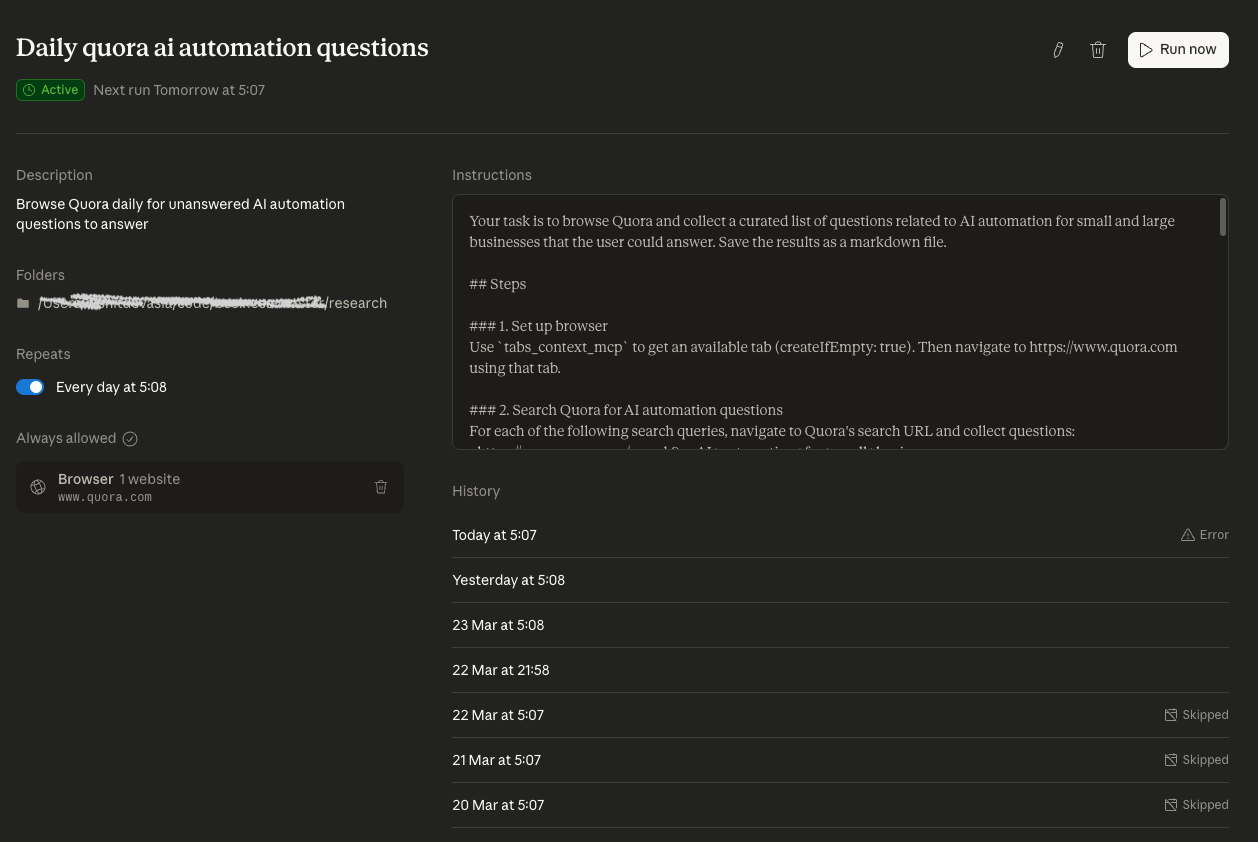
I thought I was writing on Quora.
But most of my time wasn’t writing. It was scrolling. Reading answers I didn’t need. Clicking into threads that had nothing to do with why I was there. It felt productive. It wasn’t. It was procrastination dressed up as research.
So I removed the choice.
I built a job that pulls relevant questions every morning and drops them into a document. No feed. No browsing. Just a list. I open it, pick one, and write.
When you remove the distraction, the work becomes obvious.
Tool 2: Reddit Research
Reddit is useful. Reddit is also a trap.
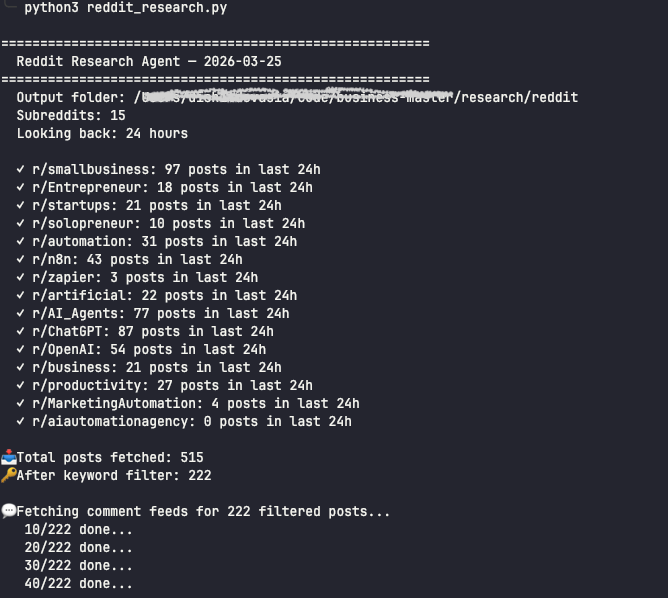
If you go in without a filter, you lose an hour. Opinions, debates, edge cases — interesting, but rarely useful. The signal is there, buried under noise.
So I forced structure on it.
A small script runs daily. It pulls posts from specific subreddits and splits them into two buckets.
- High-comment threads → insights.
- Low-comment threads → opportunities.
One shows demand. The other shows gaps. Reddit stopped being a place I visited and became a source I learned from.
Tool 3: Archive System
My folders were noisy.
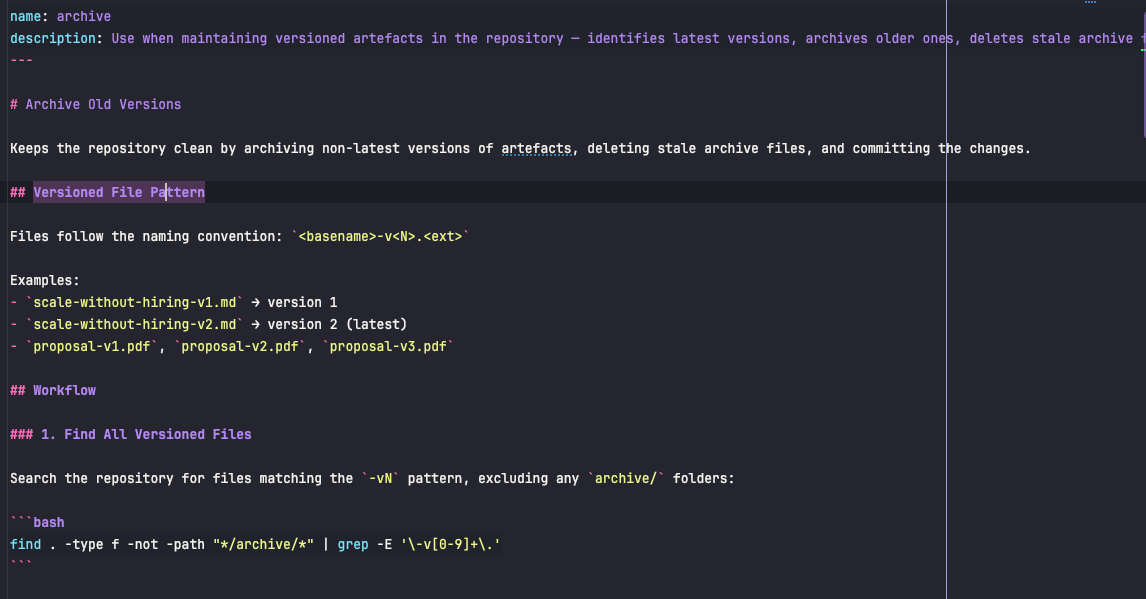
Too many versions. Too many decisions already made, still sitting there. Every time I opened a directory, I had to think. What’s current? What’s old? What can go?
So I let the system decide.
A simple command scans the folder, moves older versions into an archive, and flags anything stale. I run it when things feel heavy.
Tool 4: Diagram Creation
I used to treat diagrams as outputs.
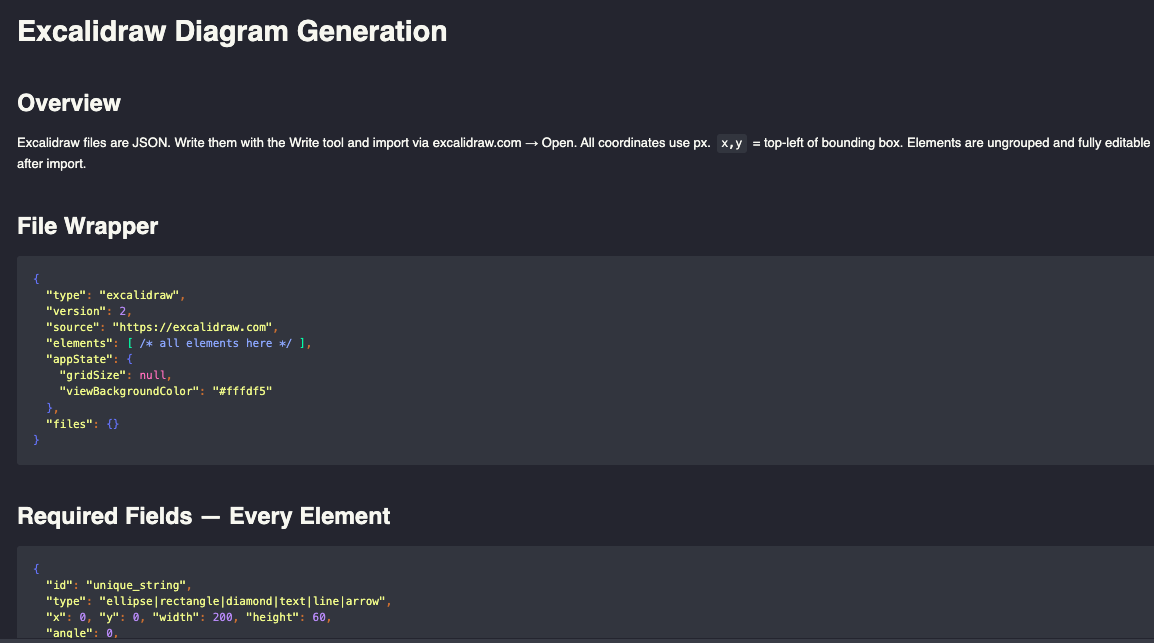
Open Excalidraw. Build from scratch. Export. Done. If I needed it again, I rebuilt it. Slowly. Slightly differently each time.
Then I changed the starting point.
I built a tool that generates a draft diagram from a prompt. Structure first. Layout roughly there. I just adjust and refine. The source file stays. It evolves with the idea.
The diagram exists before I begin. I just shape it.
Tool 5: The Closing Ceremony
I used to skip the end of my day.
Not because it was hard. Because I was tired. Saving work, updating notes, figuring out what’s next — it felt small, but it took effort. And sometimes I just didn’t have it left.
So I removed the effort.
One trigger. I say “bye.” Everything closes out: code pushed, notes updated, session complete. No checklist. No friction.
Discipline is unreliable. A single trigger isn’t.

None of these is a complex system. No Zapier. No n8n. Just Claude, simple scripts, and clear instructions.
The Pattern Behind All of This
None of these started as a system.
There was no plan to “build an AI workflow.” No tool comparison. No architecture diagram. Just a small moment of friction that showed up often enough to be annoying.
The starting point was always the same: a task that repeated. Something that pulled my attention away. Something I either delayed or avoided. Not big problems. Not strategic initiatives. Just small, persistent drains.
That’s where the signal is.
From there, the steps were always the same. Not because I designed it that way. Because that’s what the situation demanded.
Find the drain. Not a big problem. Not something strategic. Just a task that shows up every week and quietly costs you more than it should. That’s the one to start with.
Define “done.” Before you build anything, know what good looks like. What should happen? What shouldn’t? Where the edges are. Vague goals produce vague results.
Build using AI. Build remembering all the different scenarios you might encounter to complete the task. Provide AI all the scenarios and also what you are expecting it to do.
Launch and observe. The first version will be wrong in small ways. That’s not failure, that’s the process. Let it run. Watch what breaks. Adjust once. Then again.
Stop when it disappears from your mind. This is the real signal. Not when it’s perfect. Not when it’s elegant. When you simply stop thinking about it, that task is no longer yours.
No frameworks. No certifications. No “AI strategy.” Just a loop you can repeat.
One day, my daughter will know what she’s actually good at. The boring work she put in everywhere else will quietly hold everything together.
Not because something worked. Not because she found a shortcut. Because she did the same small thing, enough times.
That’s how this works, too.
Find the friction. Remove it. Move to the next one.
Not one big system. Not one perfect workflow.
Just small things, done the same way every time. Like you would on your best day.
Only now does it not depend on you going through your best day.
If you want to find the one specific problem in your business worth automating first, I have opened up time for AI Systems Strategy Calls.
→ Book your AI Systems Strategy Call here
We will map your actual workflows, identify where time and money are leaking, and find your clearest path to a system that runs quietly in the background — every day, without you thinking about it.
No pressure, no obligation. Just a focused conversation to get you unstuck.